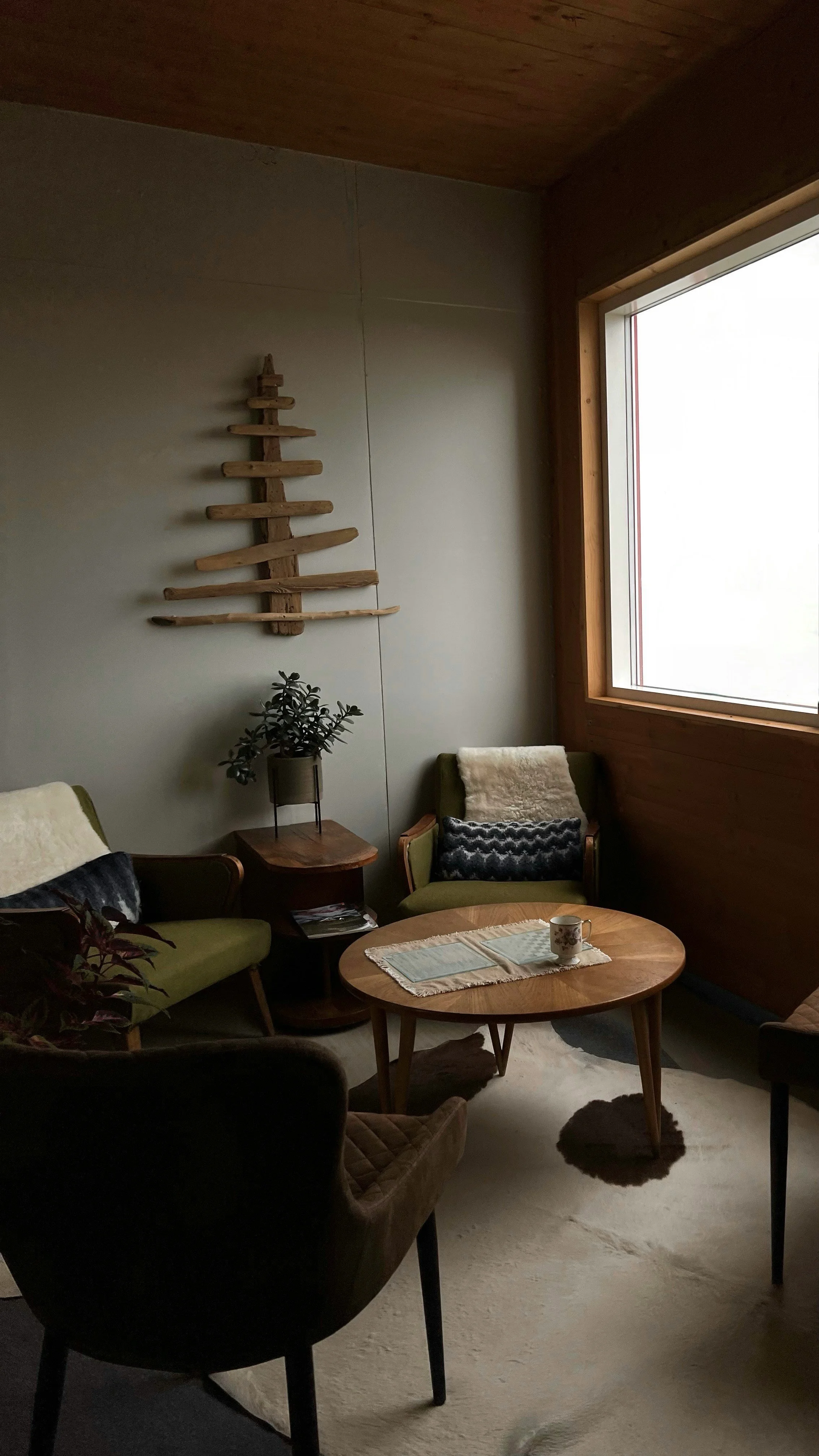
The therapy office is more than just a room. It is where you do transformative work.
You pour so much into creating a safe space for others. Interior-Sensory Consulting helps you create a clinical environment that also supports you, your practice, and your clients.

What is Interior-Sensory Consulting?
Good question! In my consulting, I start with you, the therapist. Before considering aesthetics or practicality, I want to understand your sensory experience. Imagine you're sitting in each of the chairs below during your fourth session of the day. Tune into your senses. What do you notice? What does your body feel? Which chair would help you stay fully present with your client?
Each therapist may have a different answer, and for different reasons. There are no rights or wrongs, this is about your needs and the clients you serve. Click below the images to see into my thought process as I evaluate each chair.

-
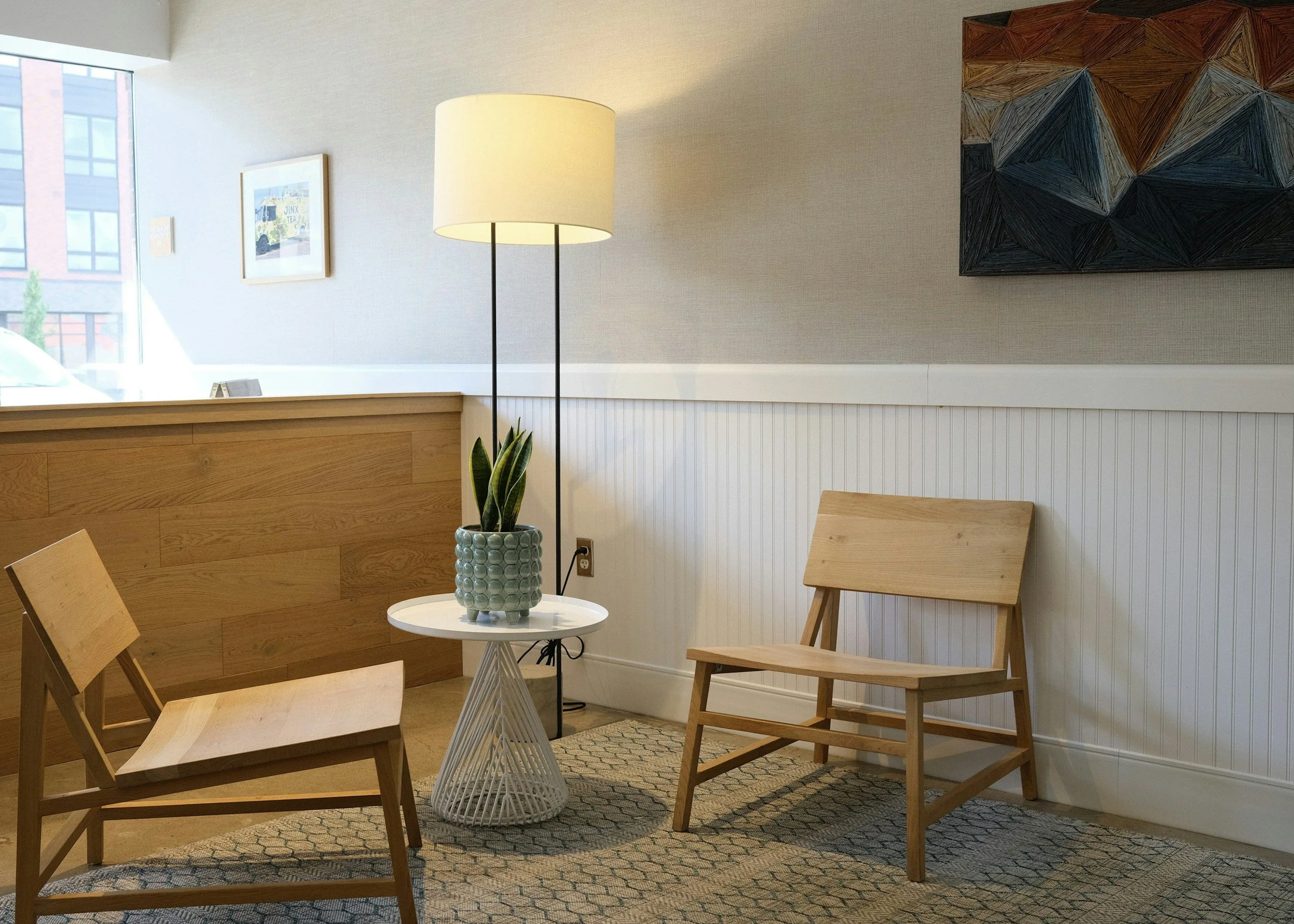
Simplicity is beauty. While I imagine this chair to be one of the less popular options, I actually like this chair. The natural materials may be inviting and grounding, especially for therapists who are more energy-sensitive or eco-conscious. The chair appears lightweight, which may be an advantage for therapists who need to quickly move a chair when movement-based or experiential interventions strike.
However, after four sessions in a firm chair, many therapists may find themselves uncomfortable and struggling to pay attention to clients because of a stiff, aching back. Personally, arm rests provide a sense of physical support and safety, especially during heavy or uncomfortable sessions. Without arm rests, some therapists may find themselves fidgeting in search of a physical anchor.
-
Comfortable, airy, and open. That is how I would describe this chair and the room it’s in. The soft natural lighting and cushy armchair immediately bring to mind some of the warmest, most empathetic therapists I have encountered. The softness of this chair appears to offer one of the most luxurious sensory experiences of the four options. The open windows (with HIPAA-compliant sheer curtains of course) evokes images of a therapist who takes a moment to look outside, reflect, and thoughtfully consider their next response.
White for office chair furniture color is often considered one of the least practical choices for a busy office. Will this therapist spend more time watching for stains than writing their notes?
-
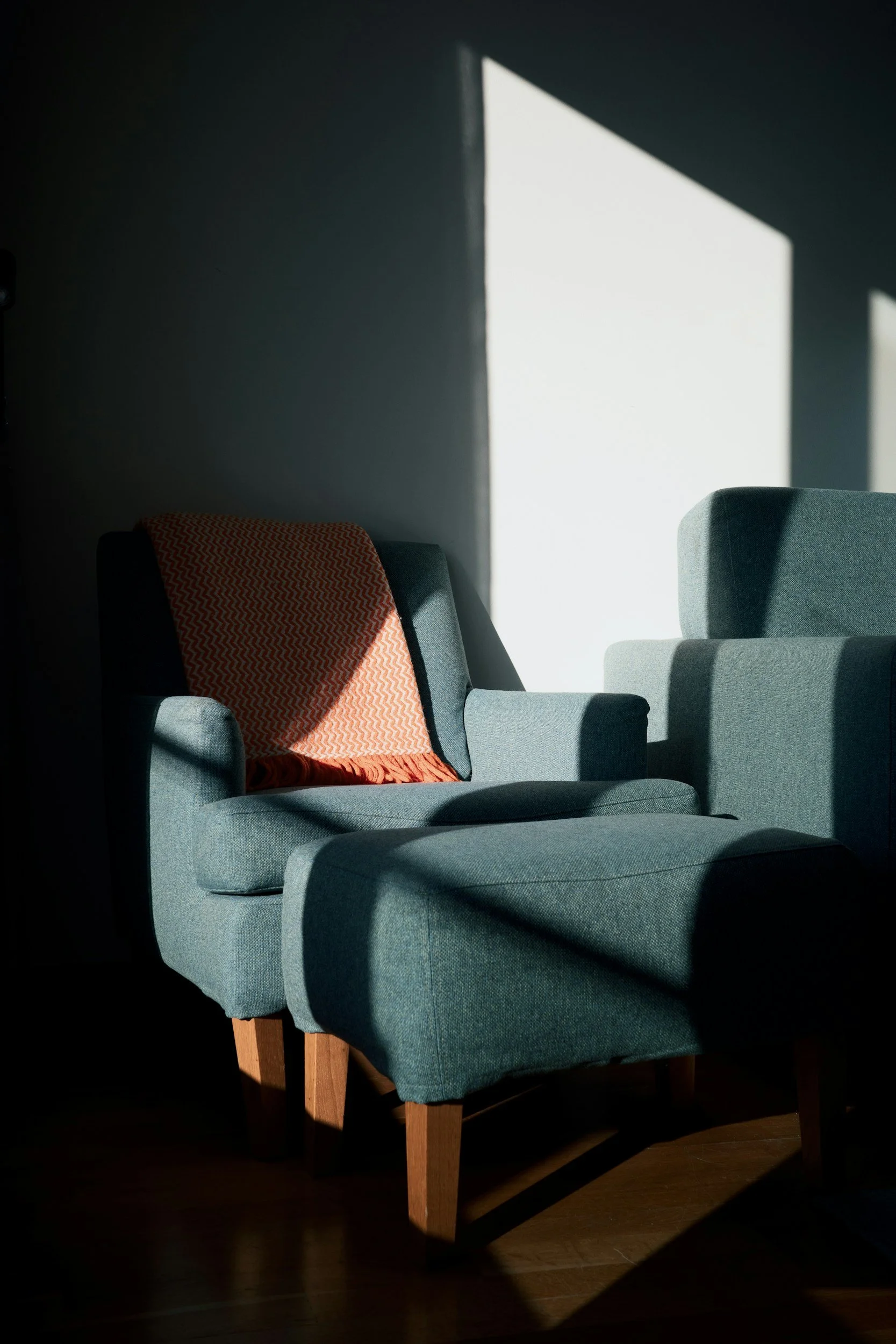
Subtle contrast shines here. I imagine that this chair is supportive in more ways than one. The arm rests and foot rest give the therapist multiple options for positioning and comfort. A therapist who intentionally uses their body language as part of interventions may feel supported in this chair. The orange shawl immediately evokes feelings of visual and physical warmth for me, adding a sense of comfort and personality to the space.
However, after four sessions in a very comfortable chair, many therapists may struggle with finding the balance between comfort and clinical presence. Does this level of relaxation help you stay grounded, or could it make it more difficult to keep your eyes open at the end of a long day?
-
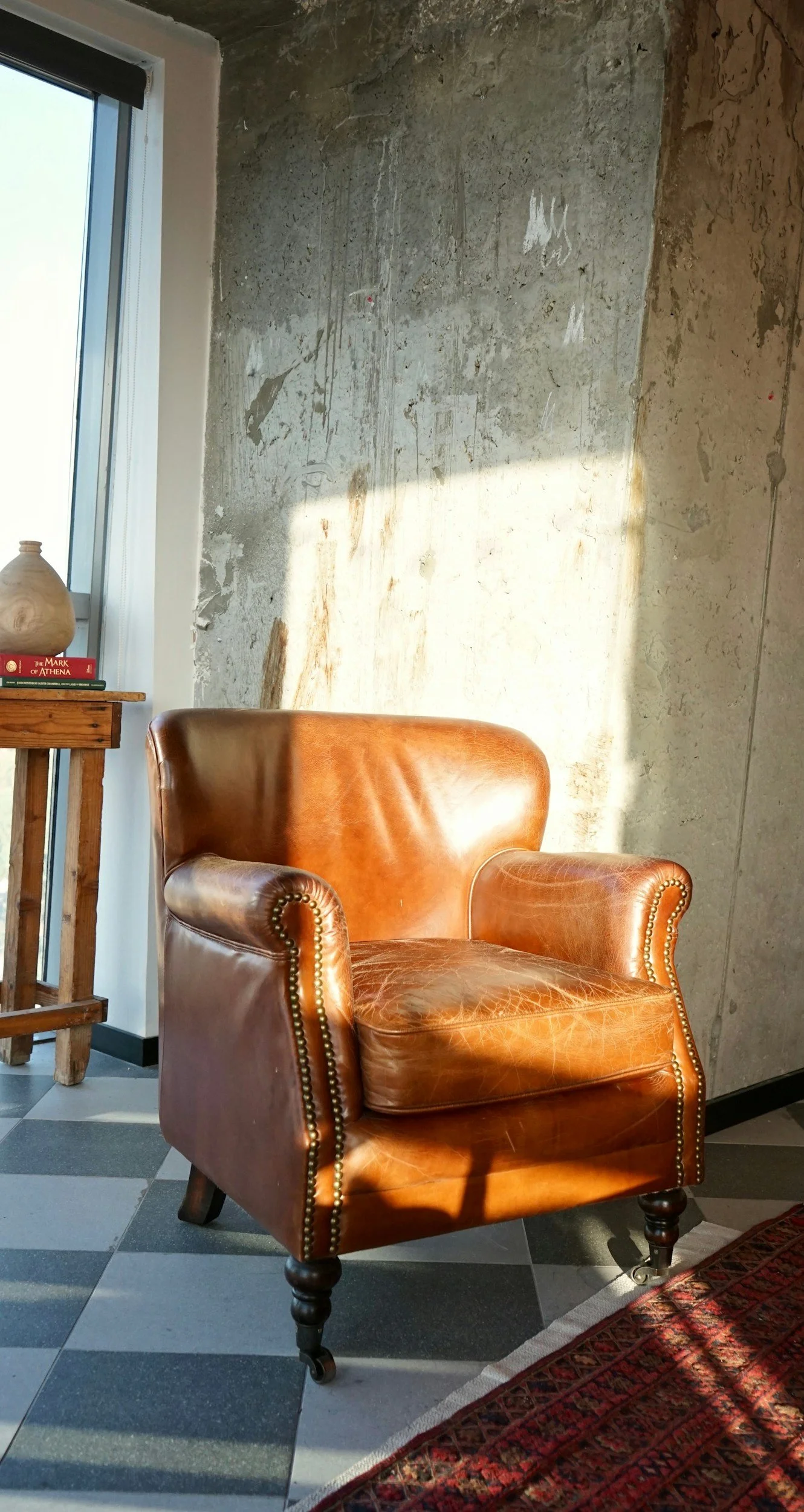
Classic with style. This leather chair feels the most “classic therapist” of the four. The natural, smooth material feels reliable and familiar. One who values therapeutic authority may appreciate how this chair communicates a sleek, classic image to their clients. The decorative studs on the arm rests may provide a place for restless fingers to land. This chair is so familiar, I can feel, and almost smell it in my imagination.
I can also hear this chair. Therapists may find themselves trying to sit especially still to avoid the awkward squeaks and creaks that can come with leather furniture. While the sunlight in this image feels warm, seating directly in front of bright lighting may have therapists squinting or feeling overstimulated.
So what did we just do?
When looking at these chairs, you may have noticed that I did not choose a "winner." Each chair has strengths, limitations, and different possibilities depending on the therapist, the clients they serve, and the type of work happening in the room.
This is the foundation of Interior-Sensory Consulting.
I consider questions like:
How does your body experience this space after hours of work?
What does this environment communicate to clients?
Does your space support your therapeutic approach?
Are your sensory needs being considered alongside the needs of your clients?
Do the objects in your office reflect your values, identity, and the work you do?

How is this different from interior design?
Well, to start, I am not an interior designer. I am a therapist like you.
Interior designers are experts in creating functional, beautiful, and cohesive spaces. They may help with furniture selection, space planning, materials, color, and aesthetics.
Interior-Sensory Consulting focuses on the relationship between the therapist, the environment, and the therapeutic process. My work begins with understanding your practice, your needs, and your experience as a therapist before considering environmental changes. Because I understand the day-to-day realities of clinical work I can approach interior-sensory consulting with a different set of questions—ones centered on how the space supports you, your clients, and the work you do together.
I am not here to tell you what your office should look like. I am here to help you understand what your space is communicating, how it is supporting your work, and where adjustments may help your environment feel more aligned.
Our Process
-
![]()
01: Discovery
We begin by getting to know you and the relationship you have with your clinical environment. I meet with you, walk the space if possible, and take pictures for the phase.
-
![]()
02: Analysis
In this phase we identify what works, and where there might be friction. I provide photo analysis, written reports from our previous meeting(s), and reflections explicitly tied to your clinical needs.
-
![]()
03: Recommendations
You'll receive personalized recommendations designed to align your space with your practice, budget, and the experience you hope to create.
-
![]()
04: Implementation and Refinement
II'll continue supporting you as you implement changes, reflect on their impact, and refine your space over time.




Let’s Work Together